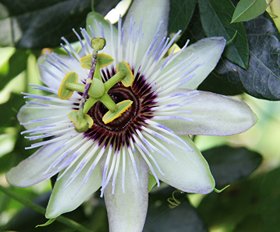
The passiflora caerulea, or blue passion flower, is a stunning climber. It adds vibrant beauty to gardens with its exotic white flowers. These flowers have purple, blue, and white filaments, attracting bees and other beneficial insects.
Growing passion flower, like passiflora incarnata, is rewarding. It’s a treat for the eyes and a great garden addition.
Passiflora caerulea has dark green, glossy leaves and grows quickly. It covers walls and fences beautifully, showing off nature’s artistry. Gardeners love it for its unique look and wildlife attraction.
With the right care, passiflora caerulea thrives in many places. It’s perfect for adding exotic beauty to your outdoor space.
A vibrant Passiflora caerulea vine adorned with intricate, multi-layered blue and white flowers, lush green leaves intertwined along a trellis, bathed in soft sunlight, showcasing dew drops on petals; surrounded by a garden setting with hints of soil rich in organic compost and watering can nearby, emphasizing care and maintenance tips for optimal growth.
Passiflora caerulea is a fast-growing vine. It makes any garden stunning. Growing it brings many benefits, including attracting bees and adding elegance.
The Passiflora caerulea, or blue passion flower, is a stunning vine. It has been fascinating gardeners and botanists for centuries. Its large, showy flowers and edible fruit make it a favorite among many. One of the key passiflora caerulea benefits is its ability to attract pollinators, making it a great garden addition.
Passiflora caerulea is among the most striking passion flower varieties. Its detailed filaments and beautiful flowers make it a plant worth studying and growing. For those wanting to grow their own, a passion flower planting guide is very helpful. It offers tips on passiflora caerulea propagation and care.
The passion flower family, Passifloraceae, has over 500 species. Passiflora caerulea is one of the most well-known. Knowing about the passion flower family helps us appreciate Passiflora caerulea’s unique traits.
Passiflora caerulea is known for its large, showy flowers and edible fruit. It also attracts pollinators, making it a great garden addition.
Passiflora caerulea has been used in traditional medicine for its sedative and anti-anxiety properties. Its fruit is also edible and nutritious.
By following a passion flower planting guide and understanding the passiflora caerulea benefits, gardeners can enjoy its beauty. Whether you’re interested in passiflora caerulea propagation or just want to learn more about passion flower varieties, Passiflora caerulea is truly captivating.
Passiflora caerulea is a climbing plant that loves warm, sunny places with good drainage. Its leaves are dark green and glossy, with a strong growth pattern. This allows it to quickly spread over walls, fences, and other supports.
To help it bloom well, it needs full sun and well-drained soil. This is key for healthy passiflora caerulea flowering.
Good passion flower Ireland care is vital. It helps avoid passiflora caerulea pests and diseases that can harm the plant.
Knowing about Passiflora caerulea’s physical traits and growth habits helps. You can then create the best environment for it to thrive and bloom beautifully.
To grow passiflora incarnata fruit varieties, passiflora edulis purple granadilla, and passiflora purple passion, you need the right conditions. The soil should be well-drained and rich in organic matter. The plants also need full sun to partial shade and temperatures between 65°F and 90°F.
It’s important to provide a support structure like a trellis or obelisk. This helps the plant climb and grow upright. The support should be strong enough to hold the plant and any fruit it produces. By meeting the specific needs of passiflora, you can ensure healthy growth and plenty of flowers.
The soil should have a pH between 6.0 and 7.0 and be rich in organic matter. Adding compost or well-rotted manure can improve its fertility. Make sure the soil drains well, as passiflora doesn’t like waterlogged soil.
Passiflora needs full sun to partial shade and temperatures between 65°F and 90°F. Protect it from extreme temperatures and frost. Use row covers or bring potted plants indoors during winter to avoid frost.
Support Structure Essentials
A support structure is key for the plant to climb and grow upright. Use a trellis, obelisk, or other sturdy structure. It should be strong enough to support the plant and any fruit it may produce.
| Plant Variety | Soil Requirements | Light and Temperature Needs | Support Structure |
| Passiflora incarnata | Well-drained soil with pH 6.0-7.0 | Full sun to partial shade, 65°F-90°F | Trellis or obelisk |
| Passiflora edulis | Well-drained soil with pH 6.0-7.0 | Full sun to partial shade, 65°F-90°F | Trellis or obelisk |
| Passiflora purple passion | Well-drained soil with pH 6.0-7.0 | Full sun to partial shade, 65°F-90°F | Trellis or obelisk |
To keep your Passiflora caerulea thriving, regular care is key. This includes a watering and feeding plan that meets its needs. Passiflora tea, made from the plant’s leaves and flowers, is a soothing drink. But, the plant needs consistent moisture, more so during the growing season.
Feeding your plant with a balanced fertilizer every two weeks helps it grow well and bloom. Pruning is also vital. It keeps your plant’s shape, encourages new growth, and helps it flower. Maypop passiflora, a type of Passiflora, grows fast. Pruning it keeps it from getting too big and invasive.
Here are some tips to keep in mind:
By following these care and maintenance tips, you can enjoy your Passiflora caerulea’s beauty and benefits. Whether you’re making passiflora tea or just enjoying its flowers, proper care is essential. It ensures your plant stays healthy and thrives.
| Plant Care | Frequency |
| Watering | Regularly |
| Feeding | Fortnightly |
| Pruning | Regularly |
As a passionate gardener, you might face some challenges with passion flower passiflora. This includes passiflora edulis and passiflora origin. Common problems are pests and diseases like aphids, whiteflies, and root rot. These can harm your passion flower caerulea – passiflora’s health and beauty.
To overcome these issues, it’s important to have some strategies ready. Here are a few tips to help you manage common challenges and solutions:
It’s also key to control invasive growth in passiflora caerulea. You can do this by giving your plant a sturdy support and pruning it regularly. This keeps it in check.
Knowing about these challenges and having strategies ready can make growing passion flower passiflora easy. With proper care, your passion flower caerulea – Passiflora will flourish. It will give you beautiful flowers and stunning foliage.
To protect your passiflora Ireland from frost and cold, winter protection is vital. You can mulch around the plant, bring potted plants inside, or use a frost blanket. These methods keep your plant warm.
| Protection Method | Description |
| Mulching | Apply a layer of organic mulch around the base of the plant to retain heat and moisture. |
| Indoor Protection | Bring potted plants indoors to a warm and bright location, or use a greenhouse to provide protection. |
| Frost Blanket | Use a frost blanket to cover your plant, trapping warm air and protecting it from frost and freezing temperatures. |
The passiflora plant is great for wildlife. It attracts bees, butterflies, and other helpful insects with its flowers. This makes it perfect for gardens, helping the local ecosystem and supporting biodiversity.
The fruit of the passiflora caerulea is edible and enjoyed in some cultures. But, eating too much can upset your stomach. So, it’s best to eat it in small amounts.
It’s important to know about passiflora caerulea pests and diseases. Regular checks and care can stop diseases and pests. This keeps the plant healthy and growing well.
Knowing the benefits and safety of the passiflora caerulea plant helps gardeners. They can enjoy its beauty and keep their garden safe for everyone.
Growing the Passiflora caerulea, or passion flower, is a rewarding hobby for gardeners. It has beautiful blooms, vibrant leaves, and attracts pollinators. This makes it a great addition to any garden.
By knowing what Passiflora caerulea needs and giving it the right care, you can make the most of it. It’s a great choice for both experienced and new gardeners. It adds beauty, function, and joy to your garden.
This passion flower has a rich history and many uses today. It’s a treasure for those who love nature. So, why not try growing Passiflora caerulea Ireland, and see its beauty for yourself? Check Related Plants.
At MD Burke Ltd, we are your trusted gardening experts with several years of experience in the industry. Based in Ireland, we specialize in providing high-quality garden machinery, parts, and construction equipment to meet all your gardening needs.
Our extensive range includes top categories like chainsaws, lawnmowers, and cleaning products, ensuring that you find the right tools for every task. Whether you’re a gardening enthusiast or a professional landscaper, MD Burke Cashel is dedicated to delivering exceptional products and expert advice to help you cultivate your outdoor spaces with ease.
Explore our blog
Passiflora caerulea, also known as the blue passion flower, is a stunning vine. It has white blooms with purple, blue, and white filaments. This plant is a visual treat and attracts bees and other beneficial insects, making it great for gardens.
Passiflora caerulea belongs to the Passifloraceae family, with over 500 species. It has large, showy flowers and edible fruit. Passion flowers have been used for medicine and food for centuries. Passiflora caerulea is known for its sedative and anti-anxiety properties.
Passiflora caerulea likes well-drained soil, full sun to partial shade, and temperatures between 65°F and 90°F. It needs a support structure, like a trellis, to climb and grow upright.
To care for Passiflora caerulea, water regularly during the growing season. Feed it fortnightly with a balanced fertilizer. Pruning is key to keep the plant’s shape, promote growth, and encourage flowers.
Passiflora caerulea may face pests and diseases like aphids and root rot. Address these issues quickly to prevent them from spreading. It’s also important to control its invasive growth and protect it from frost during winter.
Passiflora caerulea attracts bees, butterflies, and other beneficial insects with its flowers. Its fruit is edible but should be eaten in moderation. While it offers many benefits, it’s toxic and precautions should be taken around children and pets.